
Municipal fleet tracking is the strategic use of GPS data and telematics to ensure local government vehicles operate with maximum efficiency and transparency. By monitoring real-time location and equipment status, cities can provide undeniable proof of service, optimize departmental budgets, and build lasting trust with the communities they serve.
Local governments face constant pressure to do more with less. Taxpayers expect high-quality services, but budget constraints often limit resources. This is where municipal fleet tracking becomes a critical management tool. Without accurate data, department heads are forced to rely on anecdotal evidence or manual logs (which are often incomplete or inaccurate) to justify expenditures.
When you implement a robust tracking solution, you replace guesswork with hard facts. You can see exactly where every garbage truck, street sweeper, and police cruiser is at any given moment. This level of visibility prevents unauthorized vehicle use and ensures that city employees are where they need to be. For 33 years, Rastrac has helped municipalities transition from reactive management to proactive, data-driven leadership.
One of the most significant challenges in municipal management is verifying that specialized tasks were actually completed. It is not enough to know a snow plow drove down a specific street; you need to know if the plow was actually down and clearing snow.
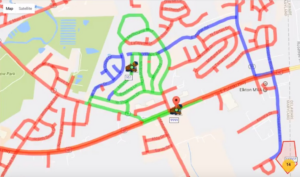
StreetComplete, a proprietary tool from Rastrac, solves this problem through sensor integration. It knows when a snow plow blade is lowered or when a street sweeper’s brushes are active. The software then paints a digital map in real-time. Streets change color as they are serviced, providing a visual confirmation of progress.
The system even uses a color-coded aging system to show recency. For example, a street might show as green immediately after a plow passes, then turn yellow after thirty minutes, and red after an hour. This allows dispatchers to identify neighborhoods that require a second pass during heavy storms. This visual proof of service is the ultimate tool for answering citizen complaints with objective data.
Accountability also extends to how city funds are spent on fuel and maintenance. Municipal fleet tracking provides deep insights into driver behavior that directly impacts the bottom line. Excessive idling is a common “silent killer” of municipal budgets. Many city vehicles idle for hours during shifts, wasting fuel and increasing engine wear.
Data shows that fleets can reduce fuel costs by 15 to 30 percent simply by monitoring and reducing idle time. Rastrac identifies these patterns, allowing you to coach drivers and implement better operational protocols. Additionally, by tracking engine hours and mileage with 99.99 percent accuracy, you can move to a preventative maintenance schedule. This prevents the costly “nuisance service calls” that can drain a department’s repair budget. With over $2.5 billion in assets currently tracked on our platform, we have seen how small adjustments in behavior lead to massive annual savings.
In the modern digital age, citizens expect transparency. They want to know when their street will be plowed or why the trash was not collected on time. Municipal fleet tracking allows you to share specific data points with the public through secure, web-based dashboards.
By publishing a public-facing version of your StreetComplete map, you can let residents see snow removal progress in real-time. This reduces the volume of phone calls to city hall and empowers citizens with information. When people can see that a plow is only three blocks away, their frustration turns into appreciation for the city’s hard work. This transparency builds a culture of accountability where the government and the community are aligned on service expectations.
To achieve true accountability, local governments should focus on a specific set of Key Performance Indicators (KPIs). These metrics provide the foundation for reporting to city councils and the public:
By tracking these data points, municipal leaders can identify top-performing employees and departments while uncovering areas that need additional support or training.
Q: How does municipal fleet tracking help with budget justifications?
A: It provides objective data on vehicle utilization and service delivery. Instead of asking for a new truck based on a feeling, a department head can show a report proving that the current fleet is at 95 percent utilization and cannot meet route demands without additional assets. This data-driven approach makes it much easier to secure funding from city councils.
Q: Is the data secure enough for government use?
A: Absolutely. Rastrac uses multi-layer encryption, including TLS/SSL 128-bit encryption for data transmission and secure cloud hosting. We provide three levels of password protection so that administrators can control exactly who has access to sensitive location data and reports.
Q: Can we use our existing GPS hardware with the Rastrac platform?
A: Yes. One of Rastrac’s core differentiators is our hardware-agnostic approach. We are a software-first company. You can integrate your own compatible devices or use our ruggedized hardware, such as the PT40 for heavy machinery or the BeSol for solar-powered asset tracking. This flexibility protects your previous investments while upgrading your management capabilities.
Ready to bring absolute accountability to your fleet?
See how Rastrac’s municipal solutions can transform your operations. Our experts can demonstrate the StreetComplete platform and our reporting suite in a brief consultation.
Request a Demo | (877) 680-1188 | Contact Us